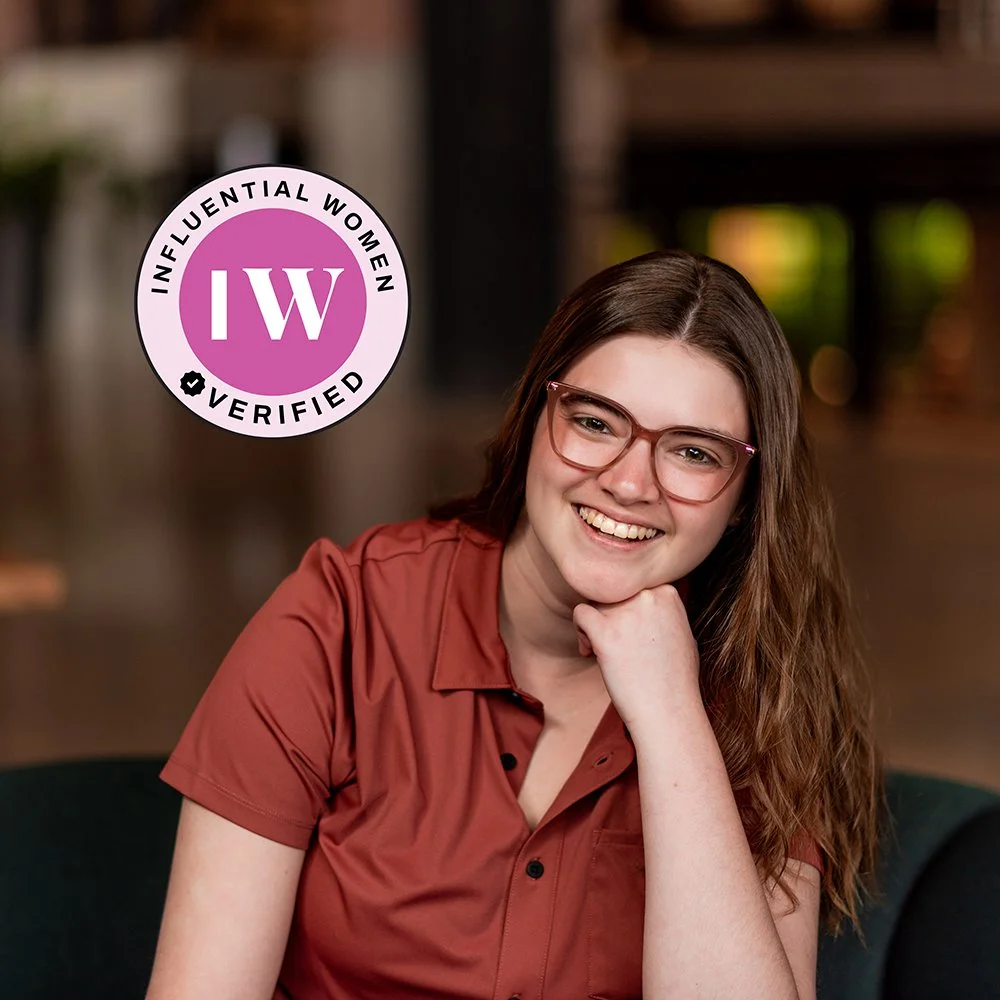
leah hopkins
Story:
Like pretty much everyone, my world completely changed with the introduction of the pandemic. I was a part of the infamous graduating Class of 2020, who are obligated to include that piece of information in any conversation relating to covid-19 in any capacity. Just when we were all preparing to don our caps and gowns, we were told to take an extended spring break. It was exciting at the time because the assumption was that after two weeks it would all go away. Well, we all know how that went. In addition to preparing to graduate from high school, I was a year away from earning my AAS in graphic design, so that was two degrees being dangled in front of me, just outside of my grasp while the world tried to understand what had just happened to it. It was a devastating time for all of us.
Some students enjoyed and thrived in virtual school, but for sensitive, community-driven humans who are driven by connection and yapping, it was less than a fun time. It was very uncomfortable. Without being able to distract myself with the outside world, I had to spend more time in my own. Nearly immediately after everyone was mandated to stay home in my state, I began taking a much closer look at what existed in my immediate vicinity. During this time, as a novice photographer, the shift from "taking photos of things" to "taking a closer look" is pretty incredible. I may not have always focused on the right thing or had uber sound technique to capture my subject matter, but something that the pandemic forced me to do is hone in my focus on specific pieces of objects, slow down, and visually dissect items into distinct shapes. I certainly didn't become a master overnight, and I still don't feel as though I am incredibly masterful with a camera, but it's pretty cool to be able to look back at my eight-year-old Instagram account and witness the progression of skill in real time. It was no longer about just taking photos of pretty flowers; it was about capturing what and how the flowers made me feel. It was no longer about just capturing things, but also what world surrounded them.
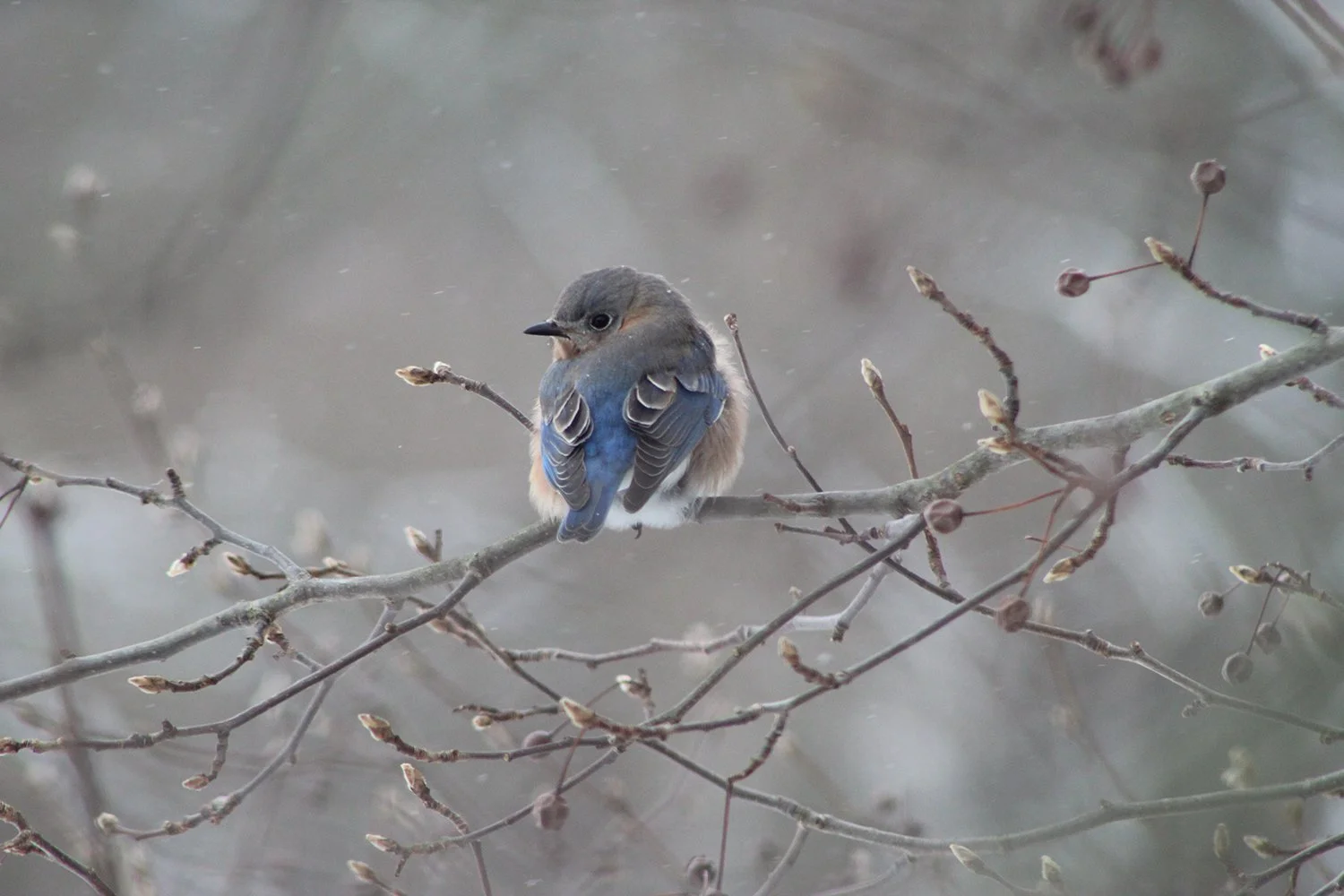
Then, we were all allowed to return to school. Carefully. It was so much better than being stuck at home, kind of. Most of us were still so unsure and afraid and the schools and state had many rules and regulations on how we could interact with each other. So, returning to nature was my only option to really silence all of the uncertain noise that the world was making. This is when my award-winning bluebirds collection was captured right at my parents' home. Most if not all of my subject matters during this era were alone or with one other partner or friend or archenemy. I didn't really realize it fully at the time, but I think the lack of physical community we were all experiencing played into the subject matters that most interested me in nature. I did a series of portraits for a final project where a loved person in my life would sit in the same chair, and the last frame was just the empty chair. I'm still not entirely sure what it means, but it definitely makes one consider how the abrupt, unexpected absence of people makes them feel.
I am extremely grateful I was not younger than I was when the pandemic struck; I was old enough to understand to the degree any seventeen-year-old could, but young enough to adapt as the times demanded. It was by no means enjoyable or easy for me, but I absolutely believe that the pandemic was an integral part of my maturation as a creative human and a person in general. It forced me to slow down, try to enjoy the smell of roses, and spend maybe a little too much time reflecting on my young and creative but equally weary and lonely life. I was just getting started on developing my brand and preparing for adult life when this all happened, and I can only hope something such as this never happens again in my lifetime, but I can attribute some of the creativity and empathy and patience I have as an artist to that era.
biography:
Leah is a graphic designer with a broad creative portfolio consisting of typography, social media, photography, various print methods, and more. What initially drew her to the graphic design field was a couple of different things: money and problem-solving. No, graphic design does not have a grand median salary, but she was offered a free associates degree in high school in graphic design, didn't have any better ideas on a career path, and she loves saving money. Creative problem-solving is a craft she's been honing for nearly a decade through design, and it's something she gets a lot of joy from. Building relationships with amazing people that have great ideas and bringing those to life through effective and beautiful design is what she enjoys most about her work. Sure, designing posters for genres she's passionate about is cool, but helping others build brands for what they're passionate about is even more special and fulfilling. In her portfolio, you'll see a variety of different works for a variety of different people and organizations.
Additionally, Leah is a creative photographer. This started many years ago with her first digital handheld device: an iPad Mini. She was always capturing anything and everything that evoked emotion for her. Once her parents realized she was serious about photography, they gifted her a Canon Rebel T6i, which is still kicking to this day over six years and a lot of use later. Leah studied digital photography in college, and that's when she took a step further into not just capturing specific items or events, but how she could make people think about what she was showing them, how it made them feel, and what the message was, if any. Her most recent and award-winning subjects are available for viewing on her website.